
Retained earnings are the portion of a company’s profits that are reinvested back into the business with debit or credit. Gain accounts record profits earned from transactions other than normal business operations. For example, a business sold an investment property for $20,000 more than its book value. Yes, retained earnings carry over to the next year if they have not been used up by the company from paying down debt or investing back in the company. Beginning retained earnings are then included on the balance sheet for the following assets = liabilities + equity year. Retained earnings are the portion of a company’s cumulative profit that is held or retained and saved for future use.
- Retained earnings are reported under the shareholder equity section of the balance sheet while the statement of retained earnings outlines the changes in RE during the period.
- Either way, dividends are an important way for shareholders to generate income from their investment in a corporation.
- Debit always goes on the left side of your journal entry, and credit goes on the right.
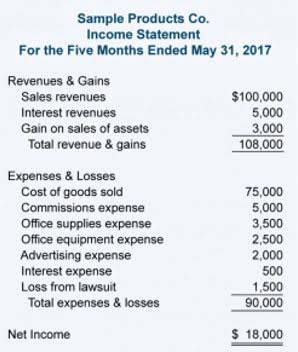
- Likewise, the net income will increase the retained earnings while the net loss will decrease the retained earnings as the result of the journal entry.
- For an analyst, the absolute figure of retained earnings during a particular quarter or year may not provide any meaningful insight.
Journal Entry (with Debit and Credit Examples)
Journal entries are used to update the general ledger accounts and form the foundation for financial statements. The normal balance in a profitable corporation’s Retained Earnings account is a credit balance. This is logical since the revenue accounts have credit balances and expense accounts have debit balances. If the balance in the Retained Earnings account has a debit balance, this negative amount of retained earnings may be described as deficit or accumulated deficit. The figure is calculated at the end of each accounting period (monthly, quarterly, or annually). As the formula suggests, retained earnings are dependent on the corresponding figure of the previous term.
How do companies use Retained Earnings?
When a company pays dividends to its shareholders, it reduces its retained earnings by the amount of dividends paid. The total amount realized by a company from the sales of goods or services rendered is its revenue. This amount includes all income that has been generated before the deduction of expenses and it is commonly referred to as gross sale.
Debits and Credits Accounting Formula
He has been the CFO or controller of both small and medium sized companies and has run small businesses of his own. He has been a manager and an auditor with Deloitte, a big 4 accountancy firm, and holds a degree from Loughborough University. Either way, dividends are an important way for shareholders to generate income from their investment in a corporation. However, stock dividends can also be quite valuable, especially if the company’s stock price is rising. While this may seem counterintuitive, it ly quite simple once you understand how the account works with debit or credit.
Liabilities

In most cases, negative earnings will only have a minor impact on the overall financial health of the company. Typically, this cash is repaid through investment in work capital, fixed investment investments, or increase retained earnings debit or credit for repayment. In this article, we discuss how retained earnings work, why companies rely on them, and how they can impact the business trajectory. This represents the wages or salaries owed to employees that have been earned but not yet paid. For example, a business accrued $1,000 in wages for the current pay period. Distribution to the owner is one of the ways that company can allocate the retained earnings to the owner.

This ratio helps investors understand how effectively a company is using its retained earnings to generate additional profits. Profits generally refer to the money a company earns after subtracting all costs and expenses from its total revenues. Yes, having high retained earnings is considered a positive sign for a company’s financial performance. These programs are designed to assist small businesses with creating financial statements, including retained earnings. First, revenue refers to the total amount of money generated by a company. It is a key indicator of a company’s ability to generate sales and it’s reported before deducting any expenses.

Retained earnings formula is the portion of a company’s net income that is not paid out as dividends to shareholders. Retained profits can be found in the shareholders’ equity section of a Bookkeeping for Consultants balance sheet during an accounting quarter. Yes, retained earnings can turn negative if a company consistently loses money or pays out more in dividends than it earns. This is often pointed out as an accumulated deficit and can indicate financial trouble.
Recording Changes in Balance Sheet Accounts

This includes making necessary journal entries to reflect changes in retained earnings, such as adjustments for net income or dividend payments. This amount originates from the net income of the company that is found on its income statement. The amount a company gets for the stocks sold at par value is the share capital while any additional amount realized is the paid-in capital. Whenever a company declares distributions, the amount used to pay the shareholder dividends is deducted from the retained earnings account.
Cash Flow Statement
This represents the cumulative profits earned by the business that has not been distributed to shareholders as dividends. Debits are typically used to decrease revenue accounts, although this is rare and often related to returns or customer allowances. Conversely, a revenue account is increased by credits indicating activities that boost revenue, such as sales of products or services. This is how net income cause accumulated earnings to increase or decrease.